Anion Gap Calculator for Physicians
What the Anion Gap Evaluates
The anion gap value serves as a clinically practical way to assess acid-base balance using a standard electrolyte panel. It describes the relationship among reported serum electrolytes and aids clinicians identify excess unmeasured anions that may be contributing to metabolic acidosis. In bedside practice, the anion gap calculator is most useful as a rapid interpretive tool rather than a standalone diagnosis.
Under normal conditions, plasma remains electrically neutral even though not every ion is directly measured. The principle of electroneutrality accounts for why the sum of cations and anions must balance. Because serum sodium, serum chloride, and serum bicarbonate are routinely available on serum chemistry testing, the anion gap serves as an easy-to-use approximation of this balance. When the gap is elevated, it suggests a metabolic derangement related to unmeasured anions.
For physicians, the anion gap is most valuable in the diagnostic evaluation of metabolic acidosis. It helps differentiate normal anion gap states from high anion gap patterns, enabling a systematic approach to acid-base disorder assessment. It is highly useful in critical care, emergency medicine, and inpatient management, where rapid clinical interpretation can influence treatment choices.
How to Operate the Anion Gap Calculator
The anion gap calculator usually requests serum sodium, serum chloride, and serum bicarbonate. Some calculators also add potassium, though many bedside and laboratory approaches omit it from the core calculation. The calculator input fields should correspond to the most recent lab values, preferably from the same sample to limit mismatch from varying physiology or laboratory timing.
To use the tool, enter the electrolyte panel values just as listed from the laboratory. The calculator will apply the selected anion gap formula and return an uncorrected anion gap value, with optional albumin adjustment if the tool includes that feature. For physician use, the result should always be interpreted with consideration of the patient assessment, acid-base analysis, and the broader differential diagnosis.
A useful process is to anion gap clinical significance begin by check that the values are consistent with each other, then assess whether the result is normal anion gap or elevated anion gap. If the clinical presentation suggests metabolic acidosis, the calculator can help determine the following step in the diagnostic algorithm, such as checking lactate, ketones, renal indices, or toxic exposure history.
Anion Gap Formula and Calculation Methods
The classic anion gap formula is:
anion gap = serum sodium - (serum chloride + serum bicarbonate)Some clinicians apply a variation that adds potassium:
anion gap = (serum sodium + potassium) - (serum chloride + serum bicarbonate)Each approach reflect the difference between measured cations and measured anions while accounting for unmeasured anions. Potassium is typically a minor contributor and is left out in many modern laboratory interpretation workflows, but it may still appear in older references or certain calculator formats.
The result is not a direct measurement of pathology; rather, it is an indirect signal of unmeasured anions in serum. These can rise in lactic acidosis, ketoacidosis, uremia, and toxic alcohol ingestion, among other causes. Because the anion gap is a preliminary tool, it should always be paired with clinical context and confirmatory testing.
Albumin correction is important because albumin is a major unmeasured anion. When albumin is low, the uncorrected anion gap may downplay the true burden of acid load. This is why many physicians favor an albumin-corrected anion gap when hypoalbuminemia is present.
Standard Anion Gap Range and Assessment
The normal range for the anion gap varies by lab technique, analyzer, and local calibration. This lab variability means there is no single universal cutoff that applies to every practice setting. Physicians should always interpret the number using the lab-specific reference range rather than relying solely on a memorized value.
A normal anion gap generally implies that the balance between measured cations and anions is preserved, even if metabolic acidosis is present. In that setting, clinicians think initially about bicarbonate loss or impaired bicarbonate regeneration, rather than accumulation of unmeasured anions. Common examples include gastrointestinal bicarbonate loss and renal tubular causes, though the exact workup depends on the individual case.
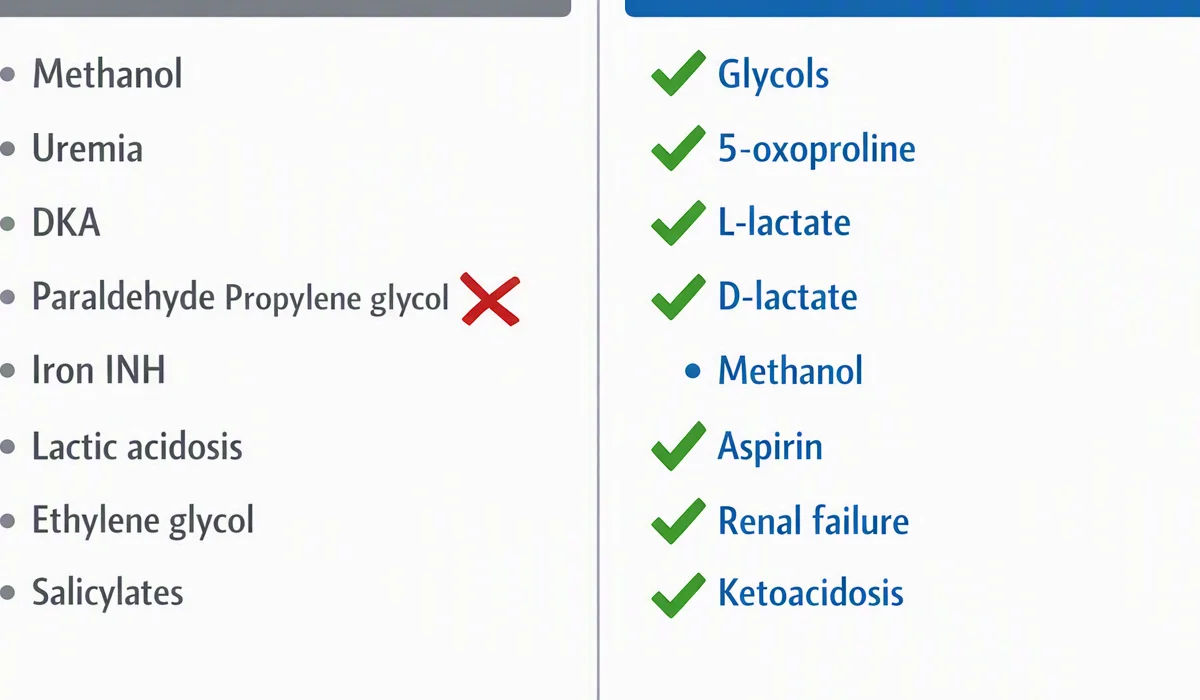
An elevated anion gap points toward additional unmeasured anions. This high anion gap pattern is central to recognizing metabolic acidosis from causes such as lactic acidosis, ketoacidosis, uremia, and toxic alcohol ingestion. Because some patients have overlapping disorders, a high value should trigger focused diagnostic evaluation rather than reflexive treatment alone.
Interpretive guidance should also include attention to whether the result is only mildly above the reference range or substantially elevated. Small differences may reflect laboratory variability, while larger changes usually indicate true metabolic derangement. Trend review across serial lab values can be more informative than a single point estimate.
Corrected Anion Gap in Low Albumin
Hypoalbuminemia is a frequent reason the anion gap seems misleadingly normal in the presence of clinically significant metabolic acidosis. Because albumin contributes substantially to unmeasured anions, a reduced serum albumin depresses the baseline gap. During critical illness, this can mask a high anion gap state unless albumin correction is applied.
The albumin correction formula is commonly used to calculate the albumin-corrected anion gap. While formulas differ slightly by institution, a commonly used approach includes a fixed increment for each gram/dL decrease in serum albumin below normal. The purpose is to avoid underestimating the acid burden when hypoalbuminemia is present.
For physicians, this adjustment is highly important in critical care, sepsis, liver disease, nephrotic states, and prolonged hospitalization. In these settings, the uncorrected anion gap may seem reassuring while the corrected value reveals substantial acid-base abnormality. That difference can alter the interpretation of the patient’s metabolic acidosis and guide the diagnostic algorithm.
When reviewing an albumin-corrected anion gap, it is important to document both the uncorrected anion gap and the correction method used. This supports transparent clinical interpretation and makes subsequent reassessment easier if the patient’s albumin shifts over time.
Increased Anion Gap Acid-Base Acidosis Evaluation
High anion gap metabolic acidosis often reflects presence of extra anions from a defined source. The major differential diagnosis includes lactate-related acidosis, ketone-associated acidosis, uremia, and toxic alcohol ingestion, but the list is more extensive and must be tailored to the patient’s presentation.
Lactate elevation is typical in shock, hypoperfusion, sepsis, seizures, and severe respiratory compromise. It is one of the key causes because it can signal time-sensitive illness. The anion gap may rise before the lactate is directly measured, making the calculator a practical screening tool in first-pass patient assessment.
Ketoacidosis may occur in diabetic ketoacidosis, alcoholic ketoacidosis, or starvation states. In these cases, serum ketones and glucose testing help confirm the diagnosis. The degree of acidemia may vary, so the anion gap should be interpreted with arterial blood gas or venous blood gas results for a broader acid-base analysis.
Uremia from renal failure raises retained acids and other unmeasured anions. This is a classic high anion gap process and often appears alongside other laboratory abnormalities that suggest chronic or acute kidney dysfunction. The serum chemistry profile, creatinine, and clinical context help distinguish uremic acidosis from other causes.
Toxic alcohol ingestion, including methanol or ethylene glycol exposure, is a high-priority diagnosis to consider when the anion gap is elevated and the history is concerning. An osmolar gap may also be useful, but it does not replace a careful toxicology-focused evaluation. In these situations, prompt recognition matters even more than numeric precision alone.
Further causes of high anion gap states can include salicylate toxicity, advanced renal dysfunction, and severe metabolic stress. A methodical approach prevents tunnel vision and helps physicians map the anion gap to the larger differential diagnosis.
Limitations and Diagnostic Pitfalls
The anion gap is useful, but it has significant shortcomings. Combined acid-base disorders can obscure the expected pattern, notably when a patient has concurrent respiratory alkalosis, metabolic alkalosis, or overlapping acid-base disorder physiology. A single number may not reveal the full picture without blood gas confirmation and clinical correlation.
Testing error is another common pitfall. Preanalytic issues, specimen contamination, and analyzer differences can distort serum sodium, serum chloride, or serum bicarbonate values and produce a misleading result. When the result seems incompatible with the clinical picture, repeat testing is appropriate before major decisions are made.
Paraproteinemia can also alter the anion gap, sometimes lowering it due to abnormal positively charged proteins. This is easy to miss if the focus remains only on elevated values. In unexplained cases, clinicians should consider plasma cell disorders and review the broader laboratory interpretation.
Respiratory compensation can create false reassurance if clinicians assume the bicarbonate change is the only issue. The anion gap does not measure compensation directly, and it does not distinguish the full acid-base balance without additional data. Arterial blood gas or venous blood gas analysis can help determine whether the patient’s ventilatory response is appropriate.
Finally, the delta gap can help identify mixed acid-base disorder patterns in high anion gap metabolic acidosis. Comparing the rise in anion gap to the fall in bicarbonate may reveal a concurrent metabolic alkalosis or normal anion gap acidosis. This makes delta gap analysis a useful add-on for interpretive guidance in more complex cases.
When to Repeat Studies or Request Additional Laboratory Tests
Repeat testing is warranted when the anion gap result is unanticipated, discordant with the clinical picture, or likely influenced by specimen quality. If the calculated value does not fit the patient’s symptoms, vitals, or other lab values, a repeat electrolyte panel can help confirm whether the result is real or due to laboratory error.
ABG testing is valuable when the severity of acidemia, oxygenation status, or respiratory compensation needs clarification. Venous blood gas testing may be sufficient in many stable situations and is often more convenient to obtain. Either can support acid-base analysis by showing pH, pCO2, and bicarbonate context beyond the serum chemistry result.
Lactate should be ordered when lactic acidosis is suspected, especially in infection, hypoperfusion, shock, or severe metabolic stress. Serum ketones are indicated when ketoacidosis is possible, including hyperglycemic and euglycemic presentations. These tests help confirm the suspected unmeasured anions driving the high anion gap.
Additional labs may include renal function testing, glucose, measured osmolality, toxicology studies, and albumin. The best choice depends on the likely diagnosis and the immediate clinical priorities. A systematic approach prevents delays and improves diagnostic evaluation in patients with significant metabolic derangement.
FAQ: Anion Gap Calculator for Physicians
What is the physician method for calculating the anion gap?
Physicians commonly calculate the anion gap using the anion gap formula: serum sodium minus the sum of serum chloride and serum bicarbonate. Some versions add potassium, but many routine clinical calculations omit it. The anion gap calculator automates this process and can also support albumin correction when needed. The result Learn here should always be interpreted with clinical context, lab values, and acid-base analysis.
What is considered a normal anion gap?
A normal anion gap depends on the laboratory reference range and analyzer method, so there is no single universal cutoff. The best practice is to use the lab-specific reference range provided with the patient’s serum chemistry results. Because lab variability is real, a value slightly outside the expected range may require repeat assessment or review of albumin and other contributing factors.
When should the anion gap be corrected for albumin?
Albumin correction should be used any time hypoalbuminemia is present, especially in critical illness or additional contexts where serum albumin is reduced. Low albumin can mask a real high anion gap metabolic acidosis by decreasing the measured gap. Using an albumin-corrected anion gap enhances clinical interpretation and can help avoid missed diagnosis of serious acid-base disorder.
What conditions cause a high anion gap metabolic acidosis?
The classic causes include lactic acidosis, ketoacidosis, uremia, and toxic alcohol ingestion. Other causes may include salicylate toxicity and advanced renal failure. The appropriate metabolic acidosis workup depends on the clinical scenario, but the elevated anion gap should trigger focused evaluation for unmeasured anions and related metabolic derangement.
What are the limitations of using an anion gap calculator?
The main limitations include mixed acid-base disorders, laboratory error, paraproteinemia, and the need for respiratory compensation assessment. The calculator is an interpretive aid, not a definitive diagnosis. Physicians should pair the result with arterial blood gas or venous blood gas data, albumin adjustment, and the broader differential diagnosis to guide patient management.