Anion Gap Calculator for Serum Chemistry Analysis
How the Anion Gap Is Assessed
The anion gap is a helpful way to analyze serum chemistry values and gauge the balance between measured cations and measured anions in the body. It is frequently used alongside an electrolyte panel to spot an electrolyte imbalance or an underlying acid-base disorder. While it is not a diagnosis by itself, it is a important screening tool for clinical assessment and patient evaluation.
In basic terms, the anion gap reflects the disparity between the positively charged and negatively charged ions that are routinely measured in serum electrolytes. The main values involved are sodium, chloride, and bicarbonate, with potassium sometimes included depending on the formula used. Because many important acids are not directly measured in routine testing, the anion gap helps estimate the presence of unmeasured anions that may be contributing to a metabolic disturbance.
Clinically, this measurement has significant significance in the evaluation of metabolic acidosis. It can point toward a wide differential diagnosis, especially when paired with a blood gas and the rest of the serum chemistry profile. Used correctly, it supports diagnostic reasoning rather than replacing it.
How to Use an Anion Gap Calculator
An Anion Gap Calculator delivers a fast calculation using commonly reported serum values. Input the patient’s sodium, chloride, and bicarbonate from the laboratory result, and the calculator yields the anion gap. Some calculators also allow inclusion of potassium, though the standard approach often leaves out it for clarity and consistency with many clinical workflows.
The basic process is easy to follow:
- Examine the patient’s electrolyte panel and verify the relevant serum values.
- Add sodium, chloride, and bicarbonate into the calculator.
- Examine the calculated result in the context of the clinical presentation.
- Consider whether albumin may require an adjustment.
- Use the result as part of broader interpretation, not as a stand-alone answer.
This calculation can be especially helpful when assessing whether a metabolic disturbance is consistent with high anion gap metabolic acidosis or normal anion gap metabolic acidosis. In practice, the number is only one part of the analysis. The real value of the calculator is in helping clinicians quickly connect chemistry data to acid-base balance and the likely mechanism of disease.
Because the calculation is based on routine serum values, the quality of the input matters. If there is a measurement issue, missing data, or a specimen concern, the output may be misleading. A calculator is a screening tool, but the interpretation still depends on clinical judgment.
Anion Gap Equation and Normal Range
The standard anion gap formula is:
Anion gap = sodium − (chloride + bicarbonate)
Some providers include potassium in the calculation, but the basic version above is frequently used because potassium adds little to the overall result. Whatever the exact formula, the goal is the same: to assess the difference between measured ions and suggest the presence of unmeasured anions.
The normal anion gap depends on the laboratory and the method used, so it is important to confirm the local reference range. A reported result should always be compared with the range provided by the lab rather than assumed to be normal or abnormal based on a single universal cutoff. Differences in analyzer technology, reporting conventions, and whether potassium is included can all influence the expected interval.
Because of this variability, clinicians should evaluate the result as part of the broader serum chemistry profile. The most useful approach is to compare the calculated gap with the lab’s reference range, then decide whether the result is increased, lowered, or within expected limits. That interpretation has direct clinical significance in acid-base analysis.
Reasons of a High Anion Gap
A elevated anion gap metabolic acidosis points to the build-up of acids that are not directly measured in routine serum chemistry. This finding often shows that the body is holding on to excess acid, depleting bicarbonate in the process and leaving behind unmeasured anions. The result is a greater-than-expected calculated gap.
One common cause is lactic acidosis, in which lactate rises during tissue hypoperfusion, severe illness, hypoxia, or other metabolic stress. Another important cause is ketone-related acidosis, which may occur in diabetes, starvation, or alcohol-related metabolic disturbance. In these settings, ketone bodies contribute to the elevated gap and the associated acid-base disorder.
Renal failure is also a classic cause. As kidney function declines, the body becomes less able to clear acids efficiently, and retained solutes play a role in the widening gap. Other causes may exist, but these three are among the most clinically important because they are common and often urgent.
When the anion gap is elevated, interpretation should be guided by the context of the patient’s symptoms, serum values, and blood gas findings. The calculator helps confirm the presence of a metabolic pattern, but the differential diagnosis still depends on the overall clinical picture. An elevated gap is a clue to look for a significant acid load, impaired clearance, or both.
Causes of a Typical or Decreased Anion Gap
A normal anion gap metabolic acidosis can still represent a real acid base imbalance, even though the calculated gap is not elevated. In these cases, bicarbonate is usually consumed, and chloride rises to maintain electrical neutrality. This pattern is often called hyperchloremic acidosis and may occur with gastrointestinal bicarbonate loss, renal tubular problems, or certain medication effects.
A lowered result may also occur with hypoalbuminemia. Because albumin has negative charge, a reduction in albumin reduces the measured gap. This is one of the most important reasons not to misread a low or normal value without checking protein status and considering a correction.
Paraproteinemia can also affect the result. In some plasma cell disorders, positively charged proteins affect with the balance of measured ions and can reduce the observed gap. This makes the interpretation more complex and increases the need for a careful differential diagnosis.
Other contributors may include laboratory issues, unusual ion composition, or specific medications. The key point is that a normal or low value does not automatically exclude metabolic acidosis. It may instead point to a different pattern of acid-base balance or to a factor that is masking the true burden of acid.
Albumin Adjustment and Why It Is Important
Correcting for albumin is important when interpreting the anion gap in patients with low protein levels. Because serum albumin is a key unmeasured anion, a reduction in albumin can make the calculated gap appear falsely normal or only mildly elevated. Put differently, the raw number may downplay the true acid burden.
The corrected anion gap updates the measured value upward based on the degree of hypoalbuminemia. This adjustment strengthens clinical assessment and helps avoid missing a high-gap process in patients whose albumin is decreased. The exact adjustment method may vary by institution, but the principle is the same: lower albumin means a lower baseline gap, so the measured result should be interpreted in light of that change.
This matters most in patients with advanced illness, malnutrition, liver disease, nephrotic-range protein loss, or other states associated with low albumin. In those situations, a seemingly normal serum chemistry result may hide a significant metabolic disturbance. Albumin correction is therefore not a minor technical detail; it is a key part of precise interpretation.
For practical use, the calculator output should be considered together with the albumin level whenever available. If albumin is reduced, the anion gap clinical significance adjusted interpretation may reveal a more clinically important acid-base disorder than the uncorrected value suggests.
Clinical Evaluation in Acid-Base Disorders
The anion gap is most helpful when integrated into the larger assessment of acid-base imbalances. A patient with metabolic acidemia should be assessed using the blood chemistry, the arterial blood gas, and the overall presentation. The gap helps separate between patterns that suggest acid increase and patterns that suggest bicarbonate loss with adaptive chloride retention.
A blood gas supplies important information about pH, carbon dioxide, and respiratory compensation. In combination with serum electrolytes, it helps determine whether the primary problem is metabolic, respiratory, or mixed. In this setting, the anion gap is a diagnostic bridge between the chemistry steps to interpret anion gap panel and the physiologic response.
For example, a patient with a low bicarbonate and high gap likely has a high anion gap metabolic process such as lactic acidosis or ketoacidosis. A patient with low bicarbonate but a normal gap may have non-gap metabolic acidosis instead. That distinction changes the evaluation path and often the urgency of care.
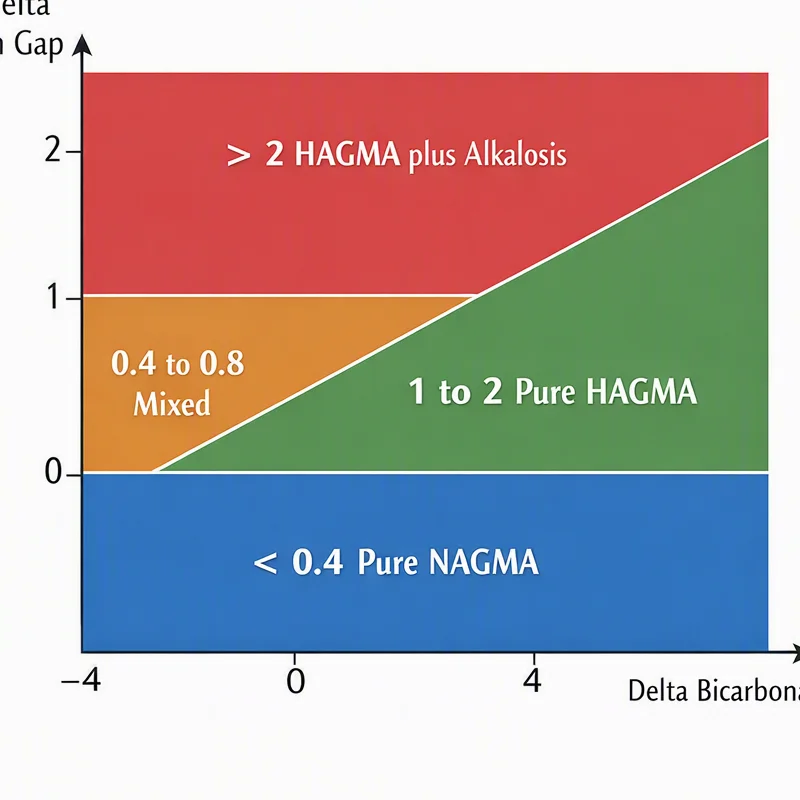
Clinical significance also depends on whether the result is stable, getting worse, or changing after treatment. Serial measurements can help track response and support patient evaluation over time. The calculation is not only about identifying a problem; it is also useful for monitoring a known metabolic disturbance.
Common Formula Mistakes and Problems
Even a useful formula can mislead if the underlying lab values are incorrect or incomplete. Measurement error is one of the most frequent problems. A blood sample that is broken down, contaminated, delayed, or generally compromised can change serum values and distort the end result.
A further common issue is failing to remember that the gap reflects only measured ions. Important contributors may be hidden as unmeasured anions, so a normal-looking value does not always mean the chemistry is all clear. The interpretation must include the possibility of combined disorders, unusual toxins, or altered physiology.
Clinicians should also be careful about uneven use of the formula. If a calculator includes potassium while another does not, the result may change somewhat. That is not necessarily an error, but it does mean the calculated value must be interpreted according to the specific formula used. Likewise, the reference range should be taken from the same laboratory that produced the result.
In the end, it is important not to treat the calculator output as conclusive on its own. An anion gap is a first step for analysis, not the conclusive diagnosis. If the clinical picture and the serum chemistry do not match, the discrepancy should prompt a more thorough review of the patient’s acid-base balance, medications, renal function, and overall presentation.
FAQ About Anion Gap Interpretation
What is the anion gap in serum chemistry?
The anion gap is a derived value from blood chemistry that helps gauge the balance between measured cations and anions. It is often used to assess acid-base balance, identify metabolic acidosis, and look for the presence of nonmeasured anions that are not listed on a routine electrolyte panel.
How do you calculate the anion gap?
The usual formula is sodium minus the sum of chloride and bicarbonate. Some formulas also include potassium, but many clinical settings use the simplified version. An Anion Gap Calculator does this calculation instantly from the reported serum values.
What does a a high anion gap?
A raised result often indicates high anion gap metabolic acidosis, which indicates acids are building up in the body. Typical causes include lactic acidosis, ketoacidosis, and renal failure. The finding should be interpreted alongside the blood gas, symptoms, and other laboratory data.
Why do you correct the anion gap for albumin?
You adjust it because albumin is a major unmeasured anion. When hypoalbuminemia is present, the measured gap may seem falsely low or normal. Albumin correction helps reveal the more accurate corrected anion gap and supports clinical interpretation.
Can a normal anion gap still indicate metabolic acidosis?
Yes. A normal anion gap metabolic acidosis is a real acid-base disorder and does not rule out acidosis. It often suggests bicarbonate loss with compensatory chloride increase. The full assessment should include serum electrolytes, blood gas analysis, and the clinical context.