How to Employ an Anion Gap Calculator for Unclear Acidosis
An anion gap calculator is a useful clinical aid for evaluating acidosis of unclear cause and helping narrow the likely cause of an acid-base disorder. By arranging common laboratory values from a chemistry panel, it helps clinicians and informed readers judge whether the pattern suggests high anion gap or normal anion gap metabolic acidity. The result is not a diagnosis by itself, but it is a simple way to inform medical assessment, inform next steps, and urine anion gap formula explanation improve interpretation of the underlying metabolic disturbance.
What the Anion Gap Measures
The anion gap is a calculated value that examines the key measured electrolytes in blood, especially sodium, chloride, and bicarbonate. It helps estimate the balance between positive and negative particles in the bloodstream. In basic terms, the calculation can reveal whether there are hidden acids collecting in the blood, which is central to understanding acid-base balance and spotting an elevated anion gap.
Because the body tightly maintains serum sodium, serum chloride, and serum bicarbonate, changes in these values can signal an underlying problem in blood chemistry. For example, if bicarbonate is low and the gap is high, that pattern often suggests added acid in the system. If the gap remains within the reference range, the cause may instead reflect direct bicarbonate loss or another process that raises chloride to maintain balance.
Understanding the anion gap is especially useful when a patient has acidosis but the cause is not obvious. It offers a structured way to think about acid accumulation, helps separate one type of metabolic acidosis from another, and supports cause identification when symptoms and routine tests do not immediately explain the problem.
How to Determine the Anion Gap
The typical anion gap formula typically uses sodium minus the total of chloride and bicarbonate:
Anion gap = Sodium − (Chloride + Bicarbonate)
This calculation comes from values on a serum chemistry panel, where the key inputs are the measured sodium, chloride, and bicarbonate. Some formula variations also consider potassium, but the most often used approach excludes it. The result gives a fast overview of the charge balance between measured cations and anions.
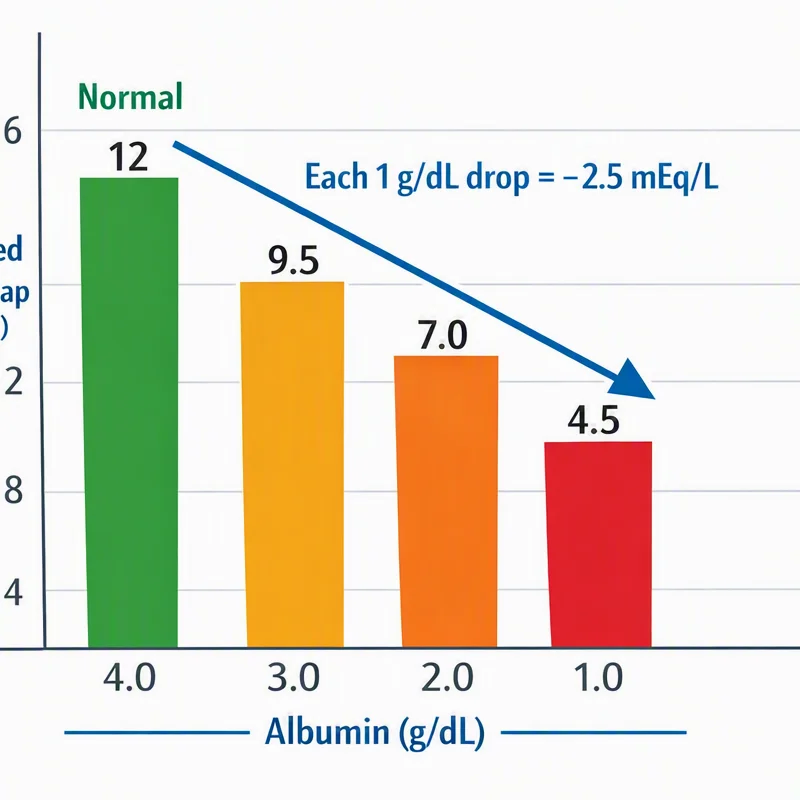
Albumin matters because it anion gap clinical significance is a major unmeasured negatively charged protein in blood. When albumin is low, the raw anion gap may seem lower than expected even if an acid-base problem is present. Because of this many clinicians also use a corrected anion gap to improve accuracy. A careful interpretation considers not only the formula result, but also whether hypoalbuminemia could be hiding a clinically important acid-base problem.
A easy way to think about the formula is this: if the measured bicarbonate drops because acid is present, the gap may widen if the lost bicarbonate is replaced by unmeasured acid anions. If bicarbonate falls because it is being lost directly from the body, chloride often rises to keep electrical neutrality, which can produce a normal gap pattern instead.
Working with an Anion Gap Calculator
An anion gap calculator simplifies the calculations and reduces the chance of error during laboratory values review. To use it, enter the relevant input values from the blood chemistry report, usually sodium, chloride, and bicarbonate. Certain calculators may also include albumin so they can display a corrected value alongside the raw result.
Once the numbers are entered, the calculator compares the result with the typical reference range. The exact range can vary by laboratory method, but the goal is the same: see whether the gap is low, normal, or elevated. A result above the expected range may suggest a high anion gap process, while a result within range may point toward a different mechanism of acidosis.
Result interpretation should always connect the number to the broader clinical picture. A small shift can matter when symptoms, other tests, or a known illness support a real metabolic problem. A calculator is useful because it quickly organizes the data, but it should be treated as part of the broader clinical assessment, not as a stand-alone answer.
Useful advice: use the calculator as a screening step. Then compare the result with symptoms, albumin level, and if available, an arterial blood gas to understand whether the acid-base imbalance is truly significant.
Origins of Elevated Anion Gap Metabolic Acidosis
Increased anion gap metabolic acidosis usually means the body has accumulated unmeasured acids. This is a classic pattern in which bicarbonate is consumed buffering excess acid, while the gap widens because the newly formed anions are not directly measured on the standard panel.
One common cause is lactic acidosis, which can occur when tissues do not receive enough oxygen or when metabolism is otherwise disrupted. Lactate builds up as a byproduct of abnormal energy production, leading to acid accumulation. Another major cause is ketoacidosis, where ketone bodies rise significantly, such as in diabetes, prolonged fasting, or severe alcohol-related metabolic stress.
Renal failure is another important cause of an elevated gap. When the kidneys cannot excrete acid effectively, acidic waste products accumulate in the blood. This can produce a widening gap and worsening acid-base imbalance. Other high-gap causes may include toxins, certain medications, and severe systemic illness, but the major categories above are the most commonly discussed when using anion gap calculator for unexplained acidosis.
The central idea is that a high gap suggests added acid rather than just bicarbonate loss. That distinction helps focus the workup. For example, a patient with elevated lactate, ketones, or kidney dysfunction likely has a different treatment path than someone with a normal gap pattern.
Origins of Typical Anion Gap Metabolic Acidosis
A typical anion gap finding, often termed chloride-rich acidosis, often indicates loss of bicarbonate or reduced bicarbonate reabsorption rather than accumulation of new acids. In this case, chloride rises to offset the bicarbonate decrease, so the overall gap stays in range even though the patient still has an acid base disorder.
Diarrhea is a typical cause because intestinal fluids contain bicarbonate. When those fluids are lost, the body can develop acidosis from loss of bicarbonate. Renal tubular acidosis is an additional major cause, since the kidneys may fail to reclaim bicarbonate or eliminate hydrogen ions properly. This can lead to persistent metabolic disturbance even when kidney filtration is otherwise preserved.
A normal-gap acidotic state is especially important to recognize because the labs may look less severe than in a high-gap state. Still, the patient can be significantly ill. The pattern often points to problems in the gastrointestinal tract or kidneys, and the clinical context helps distinguish those possibilities.
Correcting Albumin and Its Importance
Albumin is a key determinant of the measured anion gap because it holds negative charge. When albumin is low, there are fewer unmeasured anions in the blood, so the raw result may downplay the true burden of acid. This is why hypoalbuminemia can create a misleadingly normal or only mildly elevated value.
A corrected anion gap modifies the raw number to account for low albumin and enhances interpretation. This correction is important when evaluating unexplained acidosis because a patient with substantial acid accumulation may appear less abnormal on the chemistry panel if albumin is reduced. In other words, the raw number may miss the degree of disturbance.
Understanding protein binding helps show why this matters. Albumin acts as a buffer and plays a role to the pool of unmeasured anions. If that pool shrinks, the gap can shift even without a change in the primary acid-base problem. This creates one of the most frequent interpretation pitfalls in routine lab review.
Using the corrected value helps decrease missed diagnoses and supports better cause identification. It is especially useful when the clinical picture suggests significant illness, but the anion gap seems less impressive than expected. In that situation, low albumin may be hiding a meaningful disorder.
How to Read Results in Clinical Context
The anion gap is most valuable when it is interpreted alongside an arterial blood gas, especially the recorded pH. A low pH confirms acidemia, while the gap serves to help clarify whether the issue is from hidden acids or from bicarbonate loss with chloride retention. Together, they offer a clearer picture of the patient’s acid-base balance.
Further significant clues include the base deficit, which indicates the extent of physiologic acid load, and the patient’s clinical symptoms. Dyspnea, confusion, vomiting, volume depletion, weakness, or poor perfusion may all suggest a clinically significant issue. The calculator result should be interpreted in context with the physical exam, clinical history, and trajectory of the laboratory values.
For instance, a individual with acidemia, high lactate, and an raised anion gap likely has got a different process than a person with diarrhea, decreased bicarbonate, and a unchanged gap. Each can be forms of metabolic acidosis, but the workup and management steps differ.
It is important to remember that mixed acid-base disorders can occur. A person may have one process that raises the gap and another that lowers bicarbonate or alters pH in a different direction. For this reason the anion gap calculator is a assessment tool, not a complete diagnosis. It supports careful review rather than substituting clinical judgment.
When to Get Urgent Medical Evaluation
Specific anion gap values should prompt immediate evaluation, especially when along with complaints or worrisome context. Critical lab values on the chemistry panel, quickly worsening severe acidosis, or an abnormally high gap in a patient who seems critically ill may suggest a dangerous underlying cause.
Immediate evaluation is especially important if there is impaired mental awareness, notable debilitation, fainting, or breathing difficulty. These findings can indicate that the body is no longer adjusting adequately. Serious metabolic disturbances can progress quickly, so waiting for symptoms to improve on their own can be risky.
If a calculation indicates a major abnormality, and the patient also has signs of dehydration, infection, toxin exposure, diabetic crisis, or kidney dysfunction, immediate medical review is appropriate. An abnormal gap alone does not tell the whole story, but in an inappropriate context it can be a alert of a rapidly evolving illness.
Frequently Asked Questions
What is an anion gap calculator used for?
An anion gap calculator is used to speed up lab interpretation by deriving the gap from sodium, chloride, and bicarbonate values. It assists in assessing acid-base disorders, especially unexplained acidosis, and can support further testing. It is a useful medical evaluation aid, but it does not substitute for clinician assessment.
What does a high anion gap mean in unexplained acidosis?
A high result usually indicates metabolic acidosis from unmeasured acids in the blood. Common causes include lactic acidosis, ketoacidosis, and renal failure. The finding points toward acid accumulation rather than simple bicarbonate loss.
Can a normal anion gap still occur with acidosis?
Yes. A normal anion gap can still occur with acidosis, especially in hyperchloremic acidosis. Common causes include diarrhea, renal tubular acidosis, and other forms of bicarbonate loss. The patient can still be acidotic even if the gap remains within the reference range.
Why do albumin levels affect anion gap results?
Albumin contributes significantly to the pool of unmeasured anions in blood. When albumin is low, the raw gap may be falsely low or normal, which can hide an important problem. That is why the corrected anion gap is often more informative in patients with hypoalbuminemia.
When should an abnormal anion gap prompt urgent medical evaluation?
Urgent medical evaluation is warranted when an abnormal gap is accompanied by critical lab values, severe acidosis, altered mental status, or respiratory distress. Concerning symptoms, rapid worsening, or evidence of a serious underlying illness should not be ignored.