What Is the Meaning of a Low Bicarbonate With High Anion Gap Indicate?
A pattern of decreased bicarbonate with a high anion gap typically indicates a metabolic acid-base disorder, a condition in which acids build up in the body or bicarbonate is consumed while trying to buffer that acid. This provides a major clue in lab interpretation because it changes how clinicians think about the likely reason for the acidosis and what testing should happen next. An Anion Gap Calculator can help interpret the numbers from a blood test, but the result always has to be read in context with symptoms, the full blood chemistry panel, and other findings.
As this pattern can represent anything from temporary illness to a dangerous poisoning, it has important medical importance. Knowing how the anion gap, bicarbonate, and overall acid-base status helps explain why doctors may ask for more testing even when only one part of the lab report looks abnormal.
What the Anion Gap and Bicarbonate Are Measured
The anion gap is a calculated value that helps estimate the balance between positive and negative ions in the blood. It is usually based on sodium, chloride, and bicarbonate on routine blood chemistry testing. In plain language, it may indicate if there are hidden acids in the bloodstream, often described as unmeasured acids or unmeasured anions.
Bicarbonate, also reported as blood bicarbonate or CO2 on a laboratory panel, is one of the body’s main defenses against acid. When bicarbonate is reduced, it often means the body is either depleting bicarbonate or using it up while buffering acid. That is why low bicarbonate is a important clue in working up acid-base imbalance and broader electrolyte disturbance.
This set of numbers are generally part of a routine metabolic panel, which is one of the most useful snapshots of body chemistry. The measurements allow doctors to analyze lab results, determine whether there is an acid-base problem, and determine whether more urgent action is needed.
How Low Bicarbonate With High Anion Gap Arises
A decreased bicarbonate with high anion gap usually means the body has experienced acid buildup. In this case, acids accumulate more quickly than the body can clear them, or bicarbonate is being consumed as it buffers those acids. The effect is a move in blood pH toward a more acidic state.
In high anion gap metabolic acidosis, the central issue is typically the presence of extra acids that are not directly measured on standard labs. These acids elevate the anion gap calculation and decrease bicarbonate at the same time. This is why the pattern is so useful: it indicates that the problem is not just a chance abnormality, but a clue to a real change in the body’s chemical balance.
The body may try to compensate by changing breathing patterns. More rapid or deeper-than-normal breathing can lower carbon dioxide and somewhat offset the acidity. This compensation is one reason someone with acidosis may look as if they are breathing rapidly even before the cause is known.
Understanding this pattern is essential to lab interpretation. It indicates a true acid-base disorder rather than a mild incidental finding, and it should lead to a targeted diagnostic evaluation when clinically appropriate.
Typical Causes of High Anion Gap Metabolic Acidosis
Various significant conditions can cause high anion gap metabolic acidosis. The main categories include lactic acid buildup, ketone production, acid retention from kidney problems, and toxic ingestion. Each one can produce a comparable laboratory pattern even though the root cause is very different.
Lactic acidosis occurs when the body makes too much lactate or cannot clear it anion gap clinical significance effectively. It may be seen with major infection, low oxygen states, shock, seizures, or other major stressors. With rising lactate, it becomes one of the major unmeasured acids that raises the anion gap.
Ketoacidosis is another leading cause. In diabetic ketoacidosis, the body rapidly breaks down fat and produces ketones because it cannot properly use glucose. Ketones are acidic, so they reduce bicarbonate and raise the anion gap. Ketoacidosis can also occur with heavy alcohol use or extended fasting, though diabetic ketoacidosis is the most commonly recognized form.
Kidney failure can also lead to this lab pattern because the kidneys normally aid in clearing acid and maintain renal function. When kidney function declines, acids accumulate in the blood and bicarbonate can fall. In this setting, the anion gap may increase as retained acids build up over time.
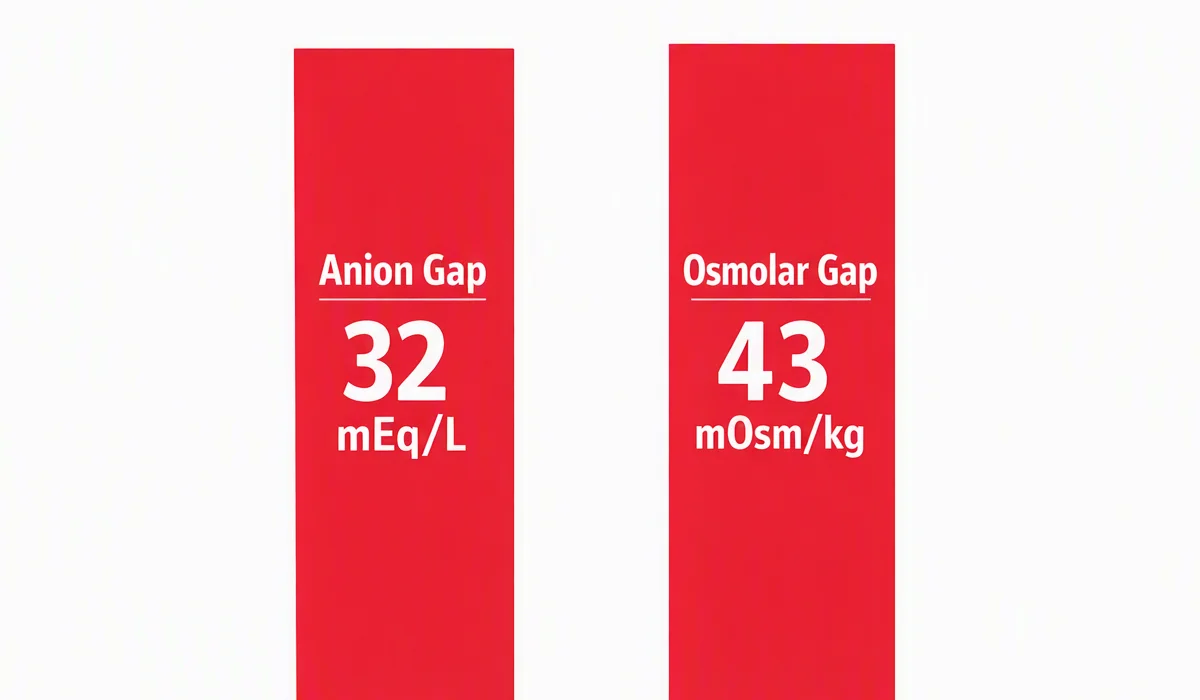
Poisons are an especially important concern because some poisonings can create severe acidosis quickly. Examples include ethylene glycol, methanol, and salicylates. These substances may cause dangerous disturbances in blood chemistry and often require immediate treatment. If a poisoning is possible, the lab pattern should not be overlooked.
How to Interpret Results From an Anion Gap Calculator
An Anion Gap Calculator is a useful tool for carrying out an anion gap calculation from standard lab values. Most calculators use sodium, chloride, and bicarbonate to calculate the gap. Some versions also include correction for albumin, which can greatly affect interpretation.
The raw result is only the first step. A “normal” number may still hide an abnormal condition if albumin is low, while a slightly high number may be more meaningful when symptoms are present. That is why the tool is best used as part of a wider blood chemistry review, not as a standalone diagnosis.
When you interpret lab results, review the full picture:
- Sodium helps ground the calculation.
- Chloride and bicarbonate help indicate whether the gap is widened or narrowed.
- Albumin can alter the expected reference range.
- The patient’s symptoms and clinical setting direct the next step.
An elevated anion gap with low bicarbonate strongly points to the body is dealing with acid excess, but the calculator itself cannot identify the specific cause of acidosis. It is a screening and interpretation aid, not a final answer.
Adjusting the Anion Gap for Albumin
Albumin correction is important because albumin is a major unmeasured anion in blood. When albumin is low, the measured anion gap can appear falsely normal or only mildly elevated even when a serious acid-base disorder is present. This is especially important in hospitalized patients, people with inflammation, malnutrition, liver disease, or other causes of hypoalbuminemia.
Without albumin correction, the reference range can be misleading. A clinician may estimate the corrected anion gap by accounting for how much albumin is below normal. That adjustment makes the result more accurate and increases the chance of detecting true high anion gap states.
If an Anion Gap Calculator incorporates albumin, it might more completely represent the actual acid burden. Without it, the result ought to be read carefully, especially when there is signs of decreased albumin or major illness.
Signs That May Appear With elevated anion gap and low bicarbonate
Symptoms can differ depending on the underlying cause, how severe the acidosis is, and how fast it appeared. Some individuals have noticeable symptoms of acidosis, while another group may only show abnormal lab values early on.
Frequent symptoms include difficulty breathing, tiredness, confusion, and rapid breathing. Rapid breathing may be the body’s way of adjusting for the acidosis by lowering carbon dioxide. In more serious cases, a person may appear weak, very sleepy, or unable to think clearly.
The symptom pattern can also provide hints about the cause. For example, nausea, vomiting, abdominal pain, and excessive thirst may fit with ketoacidosis, while weakness and confusion may indicate kidney-related acid retention or toxin exposure. Because the same lab pattern can come from very different problems, symptoms always play a role in the overall evaluation.
When Low Bicarbonate Is Not a High Anion Gap Problem
Low bicarbonate does not invariably mean high anion gap metabolic acidosis. In some instances, the problem is a normal anion gap acidosis, also called hyperchloremic acidosis. In that setting, bicarbonate is low, but chloride rises to offset the charge, so the anion gap remains within the expected range.
Diarrhea is a common cause because the body loses bicarbonate through the gastrointestinal tract. Another major cause is renal tubular acidosis, where the kidneys fail to handle acid properly even if overall renal function is not severely reduced.
Chloride plays an especially important role here. When chloride increases as bicarbonate falls, the anion gap may stay normal. That is why the distinction between high and normal anion gap acidosis is so important in medical attention and follow-up testing. The pattern changes the differential diagnosis and directs the clinician toward different diagnoses.
Investigations Clinicians Use to Identify the Cause
If the lab pattern suggests acidosis, physicians often perform additional tests to pinpoint the exact source. The objective is to move from pattern recognition to a clear diagnosis.
An arterial blood gas is one of the most important subsequent tests because it measures blood pH, carbon dioxide, and oxygen status directly. This helps confirm whether the issue is truly an acid-base disorder and how severe it is.
Common common tests include lactate, which helps detect lactic acidosis, and ketones, which are useful when ketoacidosis or diabetic ketoacidosis is suspected. A creatinine level helps assess kidney function and can point toward kidney failure or reduced clearance of acids. Depending on the situation, clinicians may also check toxicology studies if toxins are possible.
This is why an abnormal anion gap should not be treated as a standalone result. The combination of symptoms, history, and targeted tests creates the full diagnostic evaluation. An Anion Gap Calculator can https://privatebin.net/?fb32ef8d1de03843#FzrBJ7t5DwyLtcZj1bcHcQ5s3nzRMbNcpxiBG9vAMYJS help identify the pattern, but the next step is finding the reason behind it.
How to Respond If Your Lab Results Indicate This Pattern
If your labs show low bicarbonate with a high anion gap, the right next step depends on symptoms and overall health. In many cases, this pattern needs prompt medical evaluation because the underlying cause can be serious. If symptoms are severe or rapidly worsening, urgent care or emergency evaluation may be appropriate.
Never assume the finding is harmless. A high anion gap can reflect lactic acidosis, ketoacidosis, kidney failure, or exposure to dangerous substances such as ethylene glycol, methanol, or salicylates. Even if you feel relatively well, the lab pattern deserves attention because some causes progress quickly.
Repeat testing is sometimes helpful if there is concern for a testing mistake or if the result does not fit the clinical picture. Still, repeating the test should not delay evaluation when the patient is ill. The main goal is to determine the root cause and treat it without delay.
If the pattern appears on a blood chemistry panel, a clinician may review the full blood chemistry, check albumin for possible albumin-adjusted calculation, assess renal function, and decide whether an arterial blood gas test, lactate, or ketones are needed. In other words, the lab result is the start of the workup, not the end.
Properly used, an Anion Gap Calculator helps with faster recognition of dangerous acid-base disorders. It helps clinicians and patients alike understand lab results, understand the possibility of acid buildup, and decide when more immediate action is necessary.
FAQ
What does a low bicarbonate with high anion gap mean?
It usually means there is acid-base acidosis with acid buildup in the blood. The pattern suggests the body has extra acids or is retaining acids, which lowers blood bicarbonate and raises the anion gap.
What are the most common causes of high anion gap metabolic acidosis?
The most common causes include lactic acid buildup, ketoacidosis, DKA, renal insufficiency, and toxins such as ethylene glycol, methanol, and salicylates.
Can dehydration cause a high anion gap and low bicarbonate?
Simple dehydration does not usually cause this pattern, but severe dehydration can contribute indirectly by reducing circulation, worsening lactate buildup, or triggering ketoacidosis. The real cause of acidosis still needs evaluation.
How is the anion gap calculated from the anion gap from lab results?
The usual anion gap calculation uses sodium less the sum of the total of chloride and bicarbonate. Some formulas may include potassium, but many clinicians use the more straightforward version. An Anion Gap Calculator can calculate it fast and may also assist with albumin correction.
When should urgent care be sought for these lab findings?
Seek immediate medical evaluation if the lab pattern comes with shortness of breath, confusion, rapid breathing, marked weakness, vomiting, or concern for poisoning. These findings may reflect severe metabolic acidosis and require immediate evaluation.